Hong Lou Meng has drawn attention of literature lovers, philosophers, taoists, Buddhists, historians, scholars, TV producers and so on…
Dream of the Red Chamber or The Story of the Stone is an 18th-century Chinese novel authored by Cao Xueqin, considered to be one of the Four Great Classic Novels of Chinese literature.
The never ending commentaries and debates had already hinted that the masterpiece by Cao Xueqin was not only an ordinary literary work but the witness of a much deeper historical reality, concealed beneath the veils of love, philosophy, beautiful allegorical expressions and symbols.
Recent discoveries about the original ending and symbolism of the book ignited discussions and enlightenment across China. There was a moment of truth about history and some unanswered questions worldwide.
The book Hong Lou Meng begins with a symbolic child being born with a precious jade stone in his mouth. This symbolic birth also turned out to represent the Chinese character, which was oppressively forbidden during the times of the setting of the book. The 国 character, which means country, state or homeland is indeed composed of a mouth or 口 (kou) character encircling a jade 玉 (yü) character.
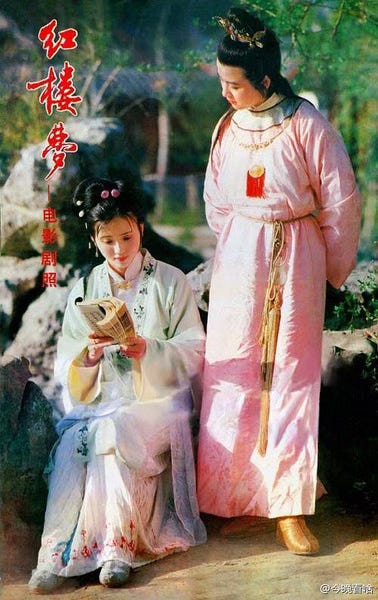
The deep love story in the book was itself a symbolic veil to hide the historical developments that were told in the book at the deeper level. Considering the oppressive transition from the Ming Dynasty to the Qing Dynasty, commonly considered as being founded by the Manchu notable Nurhaci, this literary technique was not only creative but also necessary, because the writing and documenting of any Chinese history was strictly forbidden. The slightest criticism of the Manchuria originated Qing Dynasty was a reason to be executed. Indeed, several cities and millions of people were slaughtered and exterminated by the Qing rulers. Qing conquest was not only of land but also of culture. The Ming Chinese elements of culture were being wiped out of life, including its living beings in millions. This was a turning point both in history of China and the history of the world.
Ming Dynasty had improved Chinese people’s lives tremendously allowing this calm, peaceful people to delve in scholarly activities, reading, studying sciences and enjoying art creating masterpieces of the Ming Dynasty. The harsh and oppressive nature of the Qing conquerors literally destroyed that age of human civilization, which was not to be undermined at all.
An example of Ming Dynasty’s understanding and achievement is presented to us through the centuries is another masterpiece of human civilization: The Yongle Encyclopedia. The translation into English calls the great work as an encyclopedia but it was much more than an encyclopedia of the time.
The work was commissioned in 1403 by the great Ming Emperor, using the name Yongle, 永乐, which literally means infinite happiness. The work’s name, thus, is Great Yongle Encyclopedia, 永乐大典 (Yong Le Da Dian).
The Great Canon of Yongle is a Chinese leishu encyclopedia commissioned by the Yongle Emperor (r. 1402–1424) of the Ming dynasty in 1403 and completed by 1408.
The encyclopedia was completed in 1408 at the Guozijian in Nanjing (now Nanjing University). It comprised 22,937 manuscript rolls or chapters, in 11,095 volumes, occupying roughly 40 cubic metres, and using 370 million Chinese characters—the equivalent of about a quarter of a billion English words (around six times as many as the Encyclopædia Britannica!).
It comprised 22,937 manuscript rolls in 11,095 volumes. Fewer than 400 volumes survive today, comprising about 800 rolls, or 3.5% of the original work.
This destruction alone shows the suffering of the reign of the Qing Dynasty.
As stated, Qing Dynasty was trying to overthrow the existing Chinese culture and people while replacing it with its own “envisioned” culture, which had strong elements of the Northern Mongolian sphere, including a new alphabet from Mongolian. The Qing Dynasty massacred Chinese cities, several times on occasions, and enslaved those who remained.
The system resembles that of a pharaoh, coupled with its cultural or religious circle, oppressive despotic rule and wealth. Another development. To research on is the missionary activities of Catholic Christian missionaries since one or two hundred years. Qing Dynasty, two centuries after the first Jesuit missionaries arrival in China, began appointing foreigners to administrative positions. The scientific establishments such as observatories are examples of those. It is interesting that following the Qing Dynasty take over of China, some of the most important European scientific institutions and observatories in England, France, Belgium and Germany were founded, such as the Royal Societies and Royal Observatories.
The backward oppressive process of the Qing Dynasty led China to the age of humiliation and the Opium Wars. Meanwhile, the West had initiated the Industrial Revolution and invented the steam engine.
Following the plunder of Yongle Encyclopedia and the destruction of Palace in Beijing during the Second Opium War, we must remember that the Yongle Encyclopedia had sections depicting the steam engine and mechanical devices! The missionaries certainly must have benefited the work in China, especially during the Qing Dynasty rulers. The Qing ruler Kangxi had also introduced a law in 1692 to allow practice of Christianity in China.
Another interesting content of the Encyclopedia was the gunpowder and usage of artillery to destruct the city walls!
One cannot help thinking of the Conquest of İstanbul in 1453, by the Turks, with the help of Hungarian engineer Urban, who made great artilleries for the conquest. Was there a connection with the gunpowder and mechanics knowledge depicted in Yongle Encyclopedia?
In 1860, the Anglo-French invasion of Beijing resulted in the majority of the Yongle Encyclopedia being burnt or looted, with British and French soldiers taking large portions of the manuscript as souvenirs.
5,000 volumes remained by 1875, less than half of the original, which dwindled to 800 by 1894. During the Boxer Rebellion and the 1900 Eight-Nation Alliance occupation of Beijing, allied soldiers took hundreds of volumes, and many were destroyed in the Hanlin Academy fire. Only 60 volumes remained in Beijing.
All the historical events led to the Chinese Revolution in 1949 and, one after the other, historical events led Chinese society to discover the deciphering the classic literary work, Hong Lou Meng.
Only few could have envisioned that the concealed history in the love story of the Dream of the Red Chamber, or The Story of the Stone had anything to do with such a large scale enlightenment of the Chinese people today, in 2025.
The Chinese people, having realized their significant contributions they made to human civilization and the innovations stolen from them by Europeans of those ages, nowadays feel anger, resentment on one side but also feel a deep sense of relief and pride.